
The Lab at Brookes Bell: An Update from Arron Jackaman

The Lab at Brookes Bell has grown considerably over the past year. New class society approvals, an expanding client base across new sectors, and significant investment in scanning and digital twin modelling capability have broadened what the team is able to offer. For Arron Jackaman, Director of Non-Destructive Testing, the work now is as much about education as it is about growth.
"NDT is a combination of structural, mechanical, and materials engineering brought together into one discipline," Jackaman explains. "We specialise in evaluating the condition of complex structures and components without having to damage or dismantle them. That sounds straightforward, but in practice it requires a detailed understanding of how materials behave, how structures are built, and what the class rules actually say."
That understanding was built over many years of reactive investigation work. The Lab grew directly from failure investigations, where it became clear that the tools needed to identify certain types of damage before they became serious simply did not exist within the shipping sector.
Brookes Bell developed that capability from the ground up.
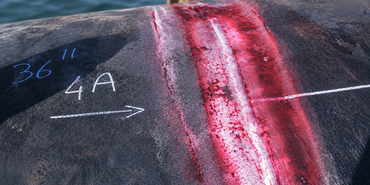
The result is a service that now covers both reactive and preventative work in roughly equal measure. Critically, The Lab operates as a fully independent, in-house facility, meaning that analysis, testing, and findings are produced entirely within Brookes Bell rather than outsourced to third parties. On the reactive side, inspection engineers attend vessels following incidents, carry out quantitative damage assessments, and collect samples for laboratory analysis. On the preventative side, the same scanning and digital twin modelling technology allows structural condition to be assessed without removing coatings or surface coverings.
That software platform has been significantly enhanced through recent investment and is now being applied across a growing range of vessel types and sectors. The superyacht and cruise industries have become areas of particular demand, where the ability to scan through surface coverings without disturbing them has obvious appeal.
"On a superyacht, everything is covered. Teak, composite decking, specialist coatings. You cannot simply lift a surface to check what is underneath without causing significant disruption and cost. Our scanning technology sees through those materials and gives a clear picture of the structural condition beneath," Jackaman notes.
Brookes Bell has recently secured DNV approval for condition assessment and fitness measurement of ships, adding to existing relationships with Lloyd's Register, Bureau Veritas, ABS, and Rina. Working across all five major classification societies means that inspection findings can be presented and defended within the framework that applies to each vessel, which matters considerably when findings are used to support or challenge a claim.
A notable development over the past year has been a growing appetite for larger, multidisciplinary investigations. Because The Lab sits within Brookes Bell rather than operating as a standalone service, inspection engineers can draw directly on the firm's metallurgists, cargo scientists, marine engineers, and naval architects on cases where the damage mechanism requires more than one area of expertise to understand. That integration is not incidental. It is what allows findings to be tested internally before they are presented externally, and what gives conclusions the robustness to hold up under challenge.
"What makes the difference in complex cases is having the right expertise available," Jackaman says. "If a damage mechanism has metallurgical implications, or the cargo interaction is relevant, those specialists are brought in. The conclusions carry more weight as a result, and they are far more defensible when challenged."
For more information about The Lab’s Advanced NDT services email: ndt@brookesbell.com
- Author
- Matt Donnelly
- Date
- 19/08/2026