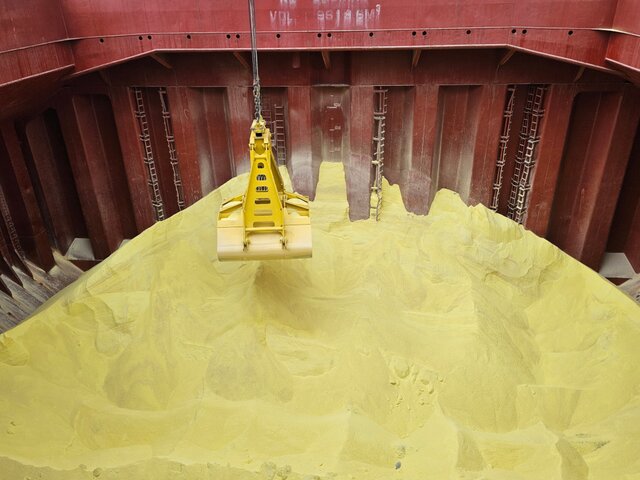

Independent inspection, testing and forensic investigation of cargo-related corrosion, coating breakdown, and structural damage.
Corrosion costs the maritime industry up to $80 billion every year. Aggressive cargoes are a leading cause.
Marine corrosion is one of the industry’s most expensive and persistent problems. A study by NACE International - now AMPP - estimated the total annual cost of marine corrosion worldwide at between $50 billion and $80 billion.
A significant proportion of that cost is driven not by the sea - but by what vessels carry.
Sulphur, coal, petroleum coke, fertilisers, acids, salts, and chloride-bearing cargoes can all initiate or accelerate corrosion in cargo holds, cargo tanks, and associated structures.
When moisture is present - through cargo residues, dust suppression water, inadequate hold preparation, or retained wash water - conditions for highly localised and aggressive attack develop quickly.
The resulting pitting, under-deposit corrosion, coating breakdown, and structural wastage can compromise a vessel’s structural integrity, restrict its trading capability, and generate high-value claims.
All of which can cost you time and money.
What makes this especially costly is that the damage is rarely what it appears to be. And, that is where the most expensive mistakes are made.
The damage you can see is rarely the whole story
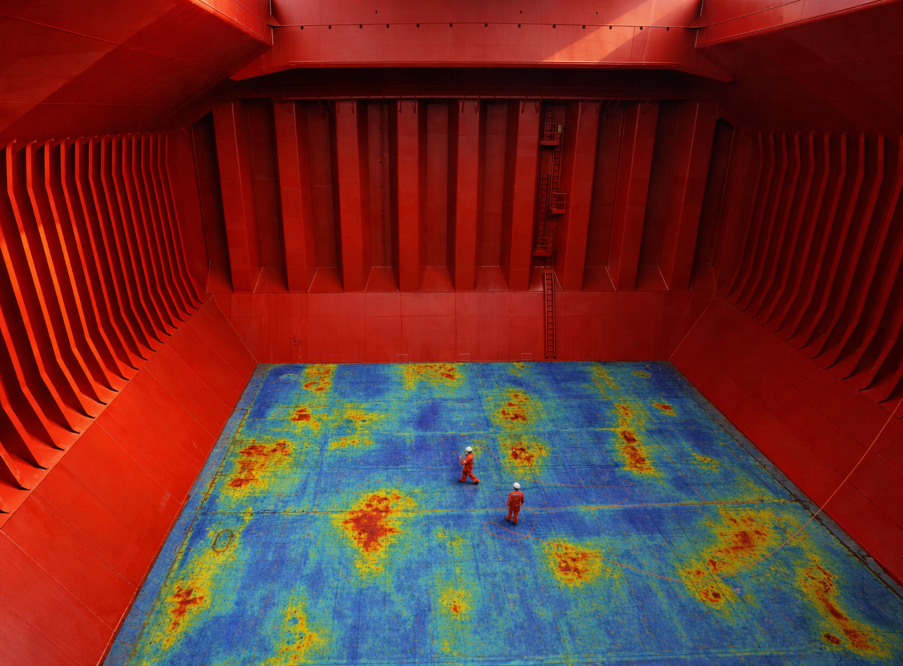
Aggressive cargo damage does not develop uniformly. It concentrates in localised areas - beneath cargo residues, scale, coating breakdown, and trapped moisture - where the steel surface is most exposed and the chemistry most aggressive.
The visible condition can be misleading but in different ways depending on the cargo and the type of steel structure involved..
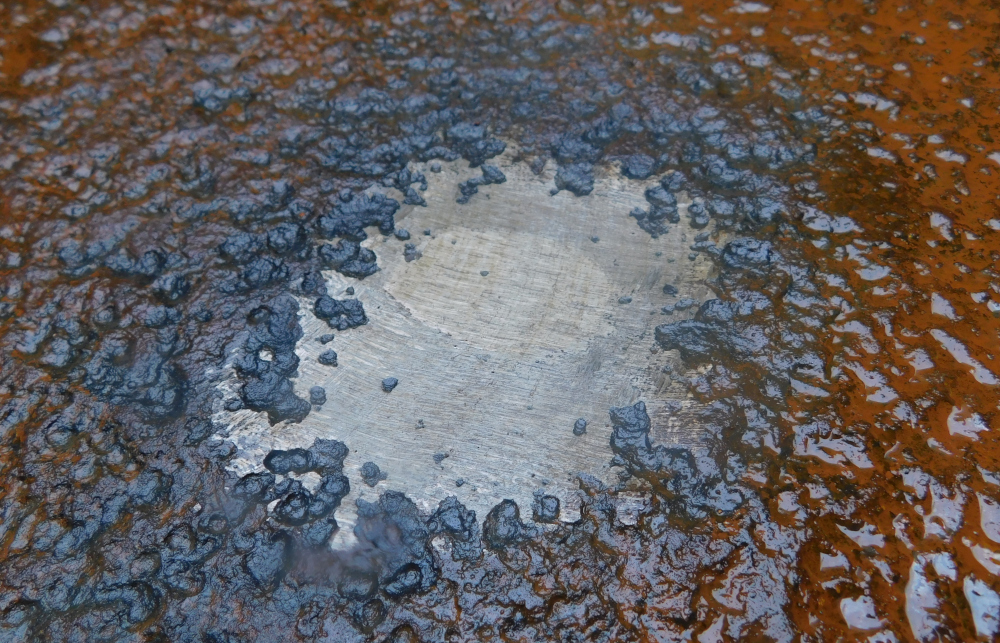
In stainless steel cargo tanks, apparently minor staining or isolated surface marks may conceal small but deep pits where the passive surface layer has broken down. In carbon steel cargo holds, particularly after wet sulphur cargoes, dark iron sulphide scale, sulphur residues and corrosion products may conceal localised wastage beneath the surface. Conversely, visually dramatic deposits can overstate the true extent of structural damage if the underlying steel has not first been cleaned, inspected and measured.
This creates a compounding commercial risk.
Overestimate the damage and you face unnecessary steel renewal, inflated repair bills, and betterment disputes.
Underestimate the damage and active corrosion sites remain in service - continuing to propagate after the vessel returns to trade, triggering further repairs, escalating claims and potential Class-related restrictions.
The damage may be hidden beneath or associated with:
- Cargo residues, tank cleaning residues and corrosion products.
- Sulphur fines, sulphur residues or iron sulphide scale in carbon steel bulk carrier holds..
- Local coating or limewash breakdown in cargo holds.
- Off spec phosphoric acid, sometimes chloride-contaminated contributes to passive film breakdown, staining or isolated attack in stainless steel cargo tanks..
- Deposits in low points, seams, and structural details.
- Areas where wash water, cargo moisture or aggressive residues have been retained.
In stainless steel chemical and product tanker cargo tanks, small pit openings are notoriously difficult to identify visually, even with high-contrast visual aids, while the true depth of attack may be disproportionate to the visible surface mark. In carbon steel bulk carrier holds, the equivalent risk is often that sulphur residues, iron sulphide scale and corrosion products obscure the actual extent of wastage until the area is cleaned and measured.
If these areas are not properly mapped and measured, they are easily missed - and the consequences follow.
The commercial risk is straightforward: if the full extent and true significance of the damage is not understood, the repair decision will be wrong.
Sulphur cargo damage
Elemental sulphur is amongst the most aggressive cargoes a vessel can carry.
Stockpiles are often exposed to open-air storage, absorbing moisture before loading. Dust suppression water applied during loading operations adds more. Once aboard, free water filters to the hold bottom, reacts with sulphur, and creates sulphuric acid - initiating corrosion of the ship’s structure.
Lime wash - the traditional protection measure - has well-documented limitations. When granular sulphur with even modest moisture content is loaded against a lime-washed carbon steel surface, the lime can soften over time and the sulphur comes into direct contact with the underlying steel. The acidic and electrochemical corrosion that follows can be severe.
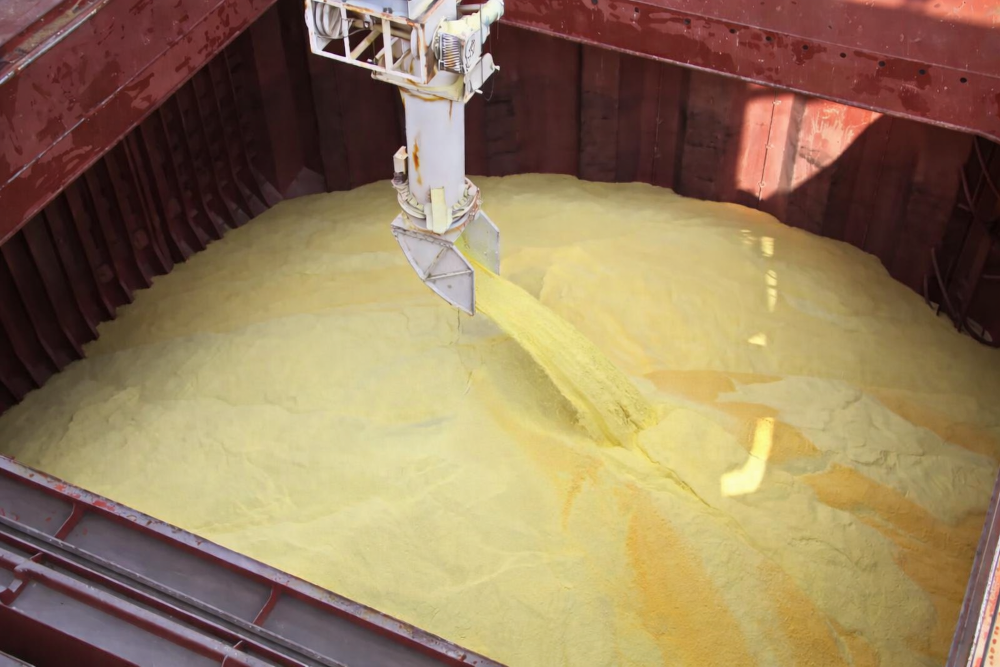
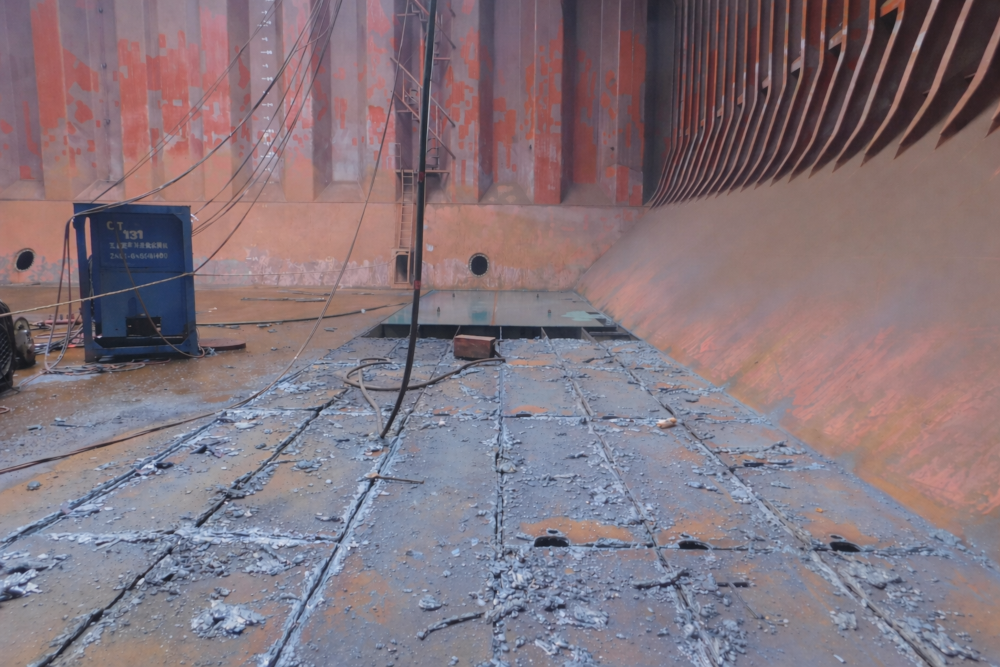
Damage typically affects tank top plating, lower hopper areas, bulkhead stools, frames, brackets, bilge areas, and other lower cargo hold structures where sulphur residues and moisture can remain trapped long after discharge.
The visible condition may be particularly deceptive in sulphur cases. Deposits and corrosion products often make affected areas appear severe, but the key technical question is whether the underlying steel has suffered measurable wastage or pitting beyond Classification Society limits or is superficial in nature made to look worse by the more voluminous corrosion product. Equally, localised but actively corrosive pits can remain entirely hidden if the area has not been properly cleaned and inspected.
The Lab supports the full process: early attendance, control of the cleaning process, surface preparation, Classification-aligned close-up survey, ultrasonic thickness measurement, pit depth measurement, corrosion mapping, sample collection, and laboratory analysis.
Where disputes arise, we help distinguish sulphur-related corrosion from pre-existing deterioration, assess mechanical and grab damage to coated structures, evaluate coating failure and identify unrelated causes if they exist.
Other aggressive cargoes and residues
Coal, petroleum coke, and mineral cargoes
Coal is inherently corrosive. Its moisture content - often 7-10% under export contracts - is sufficient to allow corrosion reactions to proceed. Pyritic sulphur and chlorides leach from the cargo, producing acidic electrolytes at the steel surface.
Carbon in coal forms galvanic couples with mild steel, and research has shown that steel in contact with coke corrodes at least twice as fast under comparable conditions with other materials.
The combination of acidic drainage, abrasion, coating damage from grab and bulldozer operations, and residue retention makes coal, petroleum coke, and mineral cargoes a sustained threat to cargo hold structure.
Distinguishing corrosion from mechanical damage, coating breakdown, and pre-existing wear is often essential to determining liability and apportioning repair costs fairly.
Acidic cargoes and chemical residues
Phosphoric acid, sulphuric acid, hydrochloric acid, and related residues can cause rapid and highly localised corrosion in cargo tanks, stainless steel linings, coated tanks, welds, heating coils, sumps, and cargo lines.
If only obvious staining and surface damage is repaired, active pits may remain in service and continue to propagate - leading to repeated repair cycles and increasing claim exposure.
Fertilisers, salts and chloride-bearing cargoes
Hygroscopic cargoes retain water against steel surfaces, allowing corrosion cells to develop beneath residues or failed coatings. Where chlorides are involved, corrosion may be highly localised and will continue beneath deposits if affected areas are not properly cleaned, tested, and assessed. Typical areas of concern include tank tops, lower hold structure, bilge areas, hatch coamings and hopper plating.
Caustic cargoes, alkaline residues and cleaning-related damage
Some caustic or alkaline cargoes, cargo residues, and tank cleaning chemicals can damage coatings, linings, aluminium, stainless steel, and other materials depending on concentration, temperature, and exposure time.
Material compatibility and cleaning records are critical lines of evidence in these cases.
Why early technical assessment changes everything
Aggressive cargo damage can become a high-value claim quickly.
Repair costs, cleaning, coating work, steel renewal, off-hire, cargo disputes, and loss of trading flexibility can all escalate if the damage is not properly understood from the outset.
Early independent assessment answers the questions that determine how a claim resolves:
- Was the damage caused by the cargo, previous cargo residues, improper tank cleaning, coating failure, mechanical damage, or pre-existing deterioration?
- Is the damage isolated or widespread?
- Has the affected structure been properly cleaned, inspected, and measured?
- Has localised pitting been fully identified and mapped?
- Is the proposed repair scope technically justified and commercially sound?
- Are the repairs proportionate to the actual condition of the structure?
- Could the vessel suffer repeated damage if returned to service without further treatment?
- Is further sampling, laboratory analysis, or metallurgical assessment required?
The earlier these questions are answered, the stronger the technical and commercial position - for everyone with a stake in the outcome.
Our approach to investigations
The Lab combines marine surveying, structural engineering, materials science, corrosion expertise, and advanced non-destructive testing to investigate aggressive cargo damage.
We don’t simply identify that damage exists.
We assess its extent, likely cause, technical significance, and relationship to the vessel’s structure, materials, cargo history, and repair requirements.
Our approach to aggressive cargo damage investigations typically follows these steps:
Early onboard attendance
We attend vessels, terminals, anchorages, and repair yards before evidence is lost to cleaning, blasting, or repair - identifying damage patterns, preserving evidence and developing a technical plan before the picture changes.
Inspection, testing, and damage mapping
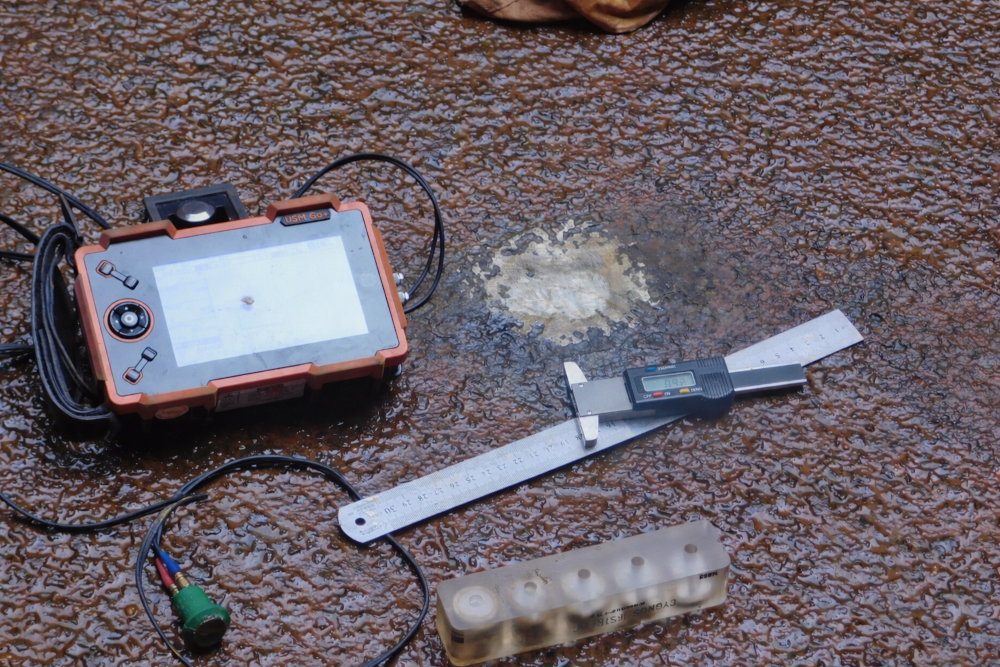
We use conventional and advanced techniques to measure and map damage beyond what surface appearance reveals: UTM, corrosion mapping, PAUT, PECA/ECA, pit depth gauging, coating assessment, material sampling and laboratory or metallurgical analysis.
Repair scope and Classification Society support
Because visible condition rarely reflects true structural condition, we help clients determine what requires repair, steel renewal or further testing - and what doesn’t - against IACS rules across LR, DNV, ABS, RINA and others.
The aim is a proportionate scope: neither under-repair nor unnecessary over-repair.
Materials, corrosion and laboratory expertise
Field inspection is backed by materials and corrosion expertise at The Lab - covering cargo history, cleaning records, coating condition, steel grade, residues, deposits, and applicable Class and regulatory requirements.
Where needed, samples are analysed to confirm damage mechanism and support causation conclusions.
Clear reporting for claims and disputes
We produce technical evidence for owners, charterers, P&I clubs, H&M Insurers, Class societies and lawyers - from condition summaries and IACS-aligned inspection maps through to expert evidence for negotiation, arbitration, or litigation.
Typical structures we inspect
Our aggressive cargo damage inspection service has - or can be - deployed across the following structures:
- Cargo hold tank top plating.
- Hopper tank plating.
- Lower stools and corrugated bulkheads.
- Frames.
- Brackets and stiffeners.
- Bilge wells and drain areas.
- Hatch coamings and lower hold structure.
- Cargo tank bottoms and bulkheads.
- Stainless steel tank linings and overlays.
- Weld seams and heat-affected zones.
- Pipework, heating coils, sumps and fittings associated with cargo systems.
Act before the evidence disappears
Every hour after discharge, evidence degrades.
Cleaning removes residues.
Blasting removes corrosion products.
Repair obscures the original condition.
Every second counts…
Once that evidence is gone, establishing causation becomes significantly harder - and so does defending or pursuing a claim.
Contact The Lab at the earliest opportunity - ideally as soon as a vessel has discharged an aggressive cargo, when staining, pitting, scale or coating breakdown is first observed, when a repair yard has proposed significant steel renewal or when a dispute is forming over cause, extent, or repair cost.
Early involvement is almost always less expensive than late involvement. The technical questions are the same either way - but, the evidence available to answer them is not.
Instruct The Lab now to investigate your aggressive cargo damage
How can we help you?